artificial intelligence
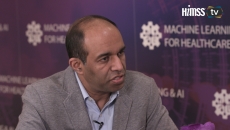
Start with engaging the clinicians and have a team to standardize care to reduce variation for measurable changes, says Srinivasan Suresh, MD, VP at UPMC Children's Hospital of Pittsburgh.
Both companies are ramping up the pace of their FDA clearances.
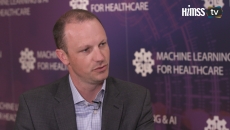
Michael Schwarz, executive director of IS at Indiana University Health System, says you don’t just jump into advanced analytics and machine learning. There’s a natural process.
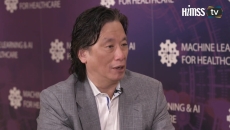
One misconception is that machine intelligence will replace human clinicians; AI and ML, in fact, will actually make the field a more attractive career choice for physicians and radiologists, says CHOC Children's CIO Anthony Chang, MD.

StethoMe's use of AI helped its smart stethoscope win the EC2VC pitch competition, says CEO and co-founder Wojciech Radomski, who discusses why AI is crucial in an era where more and more digital health devices are found in the home.
To take full advantage of AI, organizations need the right team, clear metrics and goals, and the right expectations about real-world accuracy.
The Hamilton and Amabel James Center for Artificial Intelligence and Human Health will focus on genomics, modeling and prediction of novel therapies and enhanced imaging.
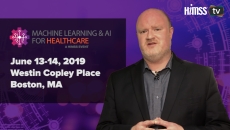
The Boston Machine Learning & AI for Healthcare event focuses on helping healthcare organizations harness the power of AI and machine learning.
Clinicians are looking forward to the benefits of AI, which will become effective in two to three years, says Mahmoud Saleh El Halik, the head of Health Informatics at Latifa Women and Children's Hospital.

Esteban Rubens, global principal for enterprise imaging at Pure Storage, says data hubs can help organizations get more value out of healthcare data by breaking down data silos.