Provider

Sandra Johnson, CliniComp senior vice president, says keeping data in a single longitudinal system makes it easier to prove AI's positive impact on metrics such as shorter stays, fewer readmissions and higher patient satisfaction.
Genentech will leverage Medra's Physical AI, Scientific AI and robotics into its lab systems to accelerate drug discovery.

The report shows that enterprise AI adoption has surged, with healthcare among the fastest‑growing sectors at 8x year‑over‑year adoption.

CLEAR's biometric ID verification will be added to Welldoc's cardiometabolic care app, a move the companies say supports federal efforts to build a more connected health ecosystem.
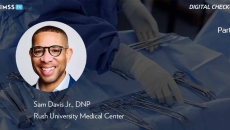
Sam Davis Jr., in the second part of our interview, says meeting regularly with surgical staff and building trust in its predictive analytics helped Rush University Medical Center enhance OR efficiency and forecast surgical demand with 90% accuracy.

The goal is to make artificial intelligence available to the federal workforce and to integrate it across internal operations, research and public health.

Investors are funneling capital into early-stage automation and clinical support tools that use AI to counter workforce shortages, according to the report.

According to healthcare leaders, 2025 was a pivotal year for AI and digital health, marked by technological progress, a shifting focus on its role in healthcare and practical use cases driving its adoption.
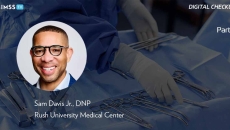
Sam Davis Jr. of Rush University Medical Center says adopting analytics enabled the system to align staffing, equipment and surgeon block time with real demand, delivering 12x ROI and improving patient outcomes.

The partnership will allow employers to purchase Noom directly through the healthcare navigation company beginning in the first quarter of 2026.