
HIMSS TV
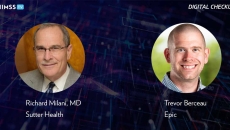
Sutter Health's Dr. Richard Milani and Epic's Trevor Berceau talk about Sutter's chronic care program, which integrates readings from remote monitoring devices into the EHR to give doctors continuous insight into patients' conditions.
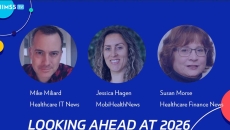
While HIMSS Media editors anticipate that AI will be used in every layer of healthcare's tech stack in 2026, they stress that governance and human oversight are essential to ensure AI works safely at scale.

Sallie Gustafson, Murj's director of medical affairs, says Emory used smart remote monitoring technology that integrates with EHR systems to increase billable remote cardiac services by 52% despite minimal patient growth.

According to Sallie Gustafson, RN, Murj’s director of medical affairs, strict CMS billing rules may negatively impact practices’ recurring revenue from their remote cardiac monitoring services.

Todd Van Meter, Accuity CEO, talks about how the company helps providers reduce clinical denials by pairing physician-led review with AI that parses medical records to ensure error-free coding and documentation.

According to Arcadia SVP Anna Basevich, the Rural Health Transformation Program will give $50 billion to hospitals to help them expand their workforces and shift to care models that will enhance outcomes and reduce costs.
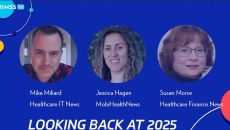
HIMSS Media editors discuss 2025 healthcare trends, including a shift toward mature AI use cases, scrutiny about ROI and regulation gaps as executives wrestle with choosing vendor partners and implementing AI tools.

Atropos Health CEO, Brigham Hyde, discusses the integration of Atropos' agentic AI agent into Microsoft Teams, helping clinical teams analyze patient information and clinical documentation during team meetings to support decision making.

According to Kevin Ritter of Altera Digital Health, health systems must go beyond simple information exchange to ensure their data is discrete, normalized and able to flow between multiple applications across the enterprise.

Arintra CEO Nitesh Shroff says the company's AI-powered platform turns complex clinical documentation into explainable, compliant codes that help reduce claim denials and support improving health systems' bottom lines.