
HIMSS TV

Lakewood Health System's Jim Roeder says building regional alliances enables rural hospitals to share expertise, strengthen defenses and keep care available when cyber incidents happen.
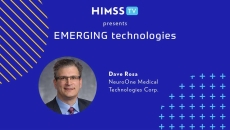
Emerging Technologies
The CEO of NeuroOne, Dave Rosa, discusses the company's minimally invasive brain-computer interface thin-film, flexible electrode technology, its successes in patients with seizures and the potential benefits across a range of neurological conditions.
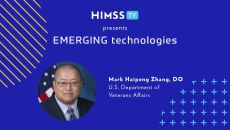
Emerging Technologies
Acting assistant under secretary for health at the U.S. Department of Veterans Affairs at the U.S. Department of Veterans Affairs, Dr. Mark Zhang, discusses the VA's research into 3D-printed biological material for veterans.

Teresa Cope, Manx Care CEO, discusses the Isle of Man's 2026 Innovation Challenge that seeks tools that address the island's health system's needs, including improving access and efficiency for a small, geographically distinct population.

AION Labs CEO, Mati Gill, discusses the company’s extensive backing from pharma and tech giants to build AI startups, and how AION is looking beyond AI to explore quantum technologies for research and development in drug discovery.

Eric Jimenez, Artesia General Hospital CIO, says the hospital first deployed AI to protect its network after a cyber incident. It expanded to ambient listening and is now seeking to use AI for clinical applications.

Michael Abrams of Numerof and Associates says that oversight for AI used in mental health care should mirror that of pharmaceuticals, with clear standards, safety testing and ongoing monitoring.

Dr. Baligh Yehia, Jefferson Health's president, says the health system will use AI to streamline scheduling, tackle revenue cycle challenges, close care gaps and give clinicians back 10 million patient hours over the next three years.

Eitan Okun, head of the Paul Feder Laboratory for Alzheimer's Disease Research at Bar-Ilan University, studies aging individuals and he is currently evaluating the link between maternal cognitive decline and pregnancy with a Down syndrome fetus.

Janus Health's Carol Howard says the WISeR model's AI-driven reviews of specific Medicare services may trigger denials. To avoid this, hospitals must align clinical documentation with local and national coverage determination rules.