strategic Planning

Doug Meil, author of The Rise and Fall of Explorys and IBM Watson Health: A Personal Memoir of a Healthcare Moonshot that Misfired, discusses some lessons learned from that era, and offers perspective on where artificial intelligence may be headed next.

Sam Davis Jr., in the second part of our interview, says meeting regularly with surgical staff and building trust in its predictive analytics helped Rush University Medical Center enhance OR efficiency and forecast surgical demand with 90% accuracy.

According to Rom Eizenberg, Kontakt.io's chief revenue officer, hospitals in 2026 will deploy AI to track people, space and equipment and to optimize length of stay, which can help reverse losses and increase profitability.

Jennifer Goldsack, CEO of the Digital Medicine Society, outlines DiMe's new project focused on aging-in-place with healthcare technologies and reimbursing remote patient monitoring as federal and private insurers' coverage policies evolve.
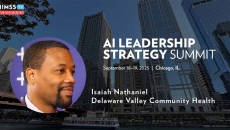
Delaware Valley Community Health SVP and CIO Isaiah Nathaniel says that, after achieving AI successes in operations and revenue cycle, he wants to deploy AI to improve clinician productivity and provide better patient experiences.

Government regulation can slow health systems' AI progress; Ed Marx, Marx Advisory CEO, says showing policymakers AI's real-world benefits in person can help them understand its value more than traditional lobbying.
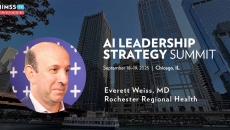
Rochester Regional Health's Dr. Everett Weiss says it is essential that everyone in your organization understands "what is our why" for using the technology, how it is helping them work more efficiently and how it is good for patients.
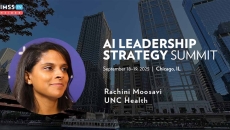
Rachini Moosavi, chief analytics officer at UNC Health, discusses moving beyond big genAI efforts to transforming smaller scale processes and workflows.

Epic Emeritus CMIO Dr. Michael Zaroukian says health system leaders can add to their EHRs' value after the initial go-live by linking it to strategic goals, empowering clinicians to share feedback and prioritizing usability.
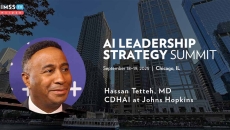
Dr. Hassan Tetteh of the Johns Hopkins Center for Digital Health and AI says that agentic AI has the potential to surpass human intelligence and change the way we work, but can also enable personalized, more patient-driven healthcare.