artificial intelligence

Health organizations should deploy AI to automate tasks like appointment scheduling and claims coding, says Kimberly Hartsfield, VisiQuate's EVP for growth enablement.
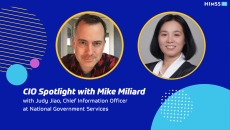
A look ahead with Judy Jiao, CIO of National Government Services, who also gives insights on precision medicine advancements and more.

According to Patty Riskind, CEO of Orbita, positive experiences with self-service chatbots can improve reliance on AI and automation.
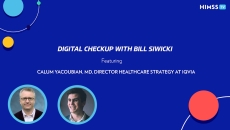
NLP can assist greatly with social determinants of health, real-time clinical decision support, predictive analytics and precision medicine, says Dr. Calum Yacoubian, IQVIA's director of healthcare strategy.
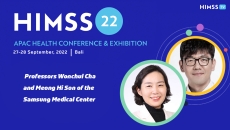
Professors from the Samsung Medical Center explain their work with the South Korean government to transform hospitals into data-driven, research-centered institutions delivering excellent care.

Grace Chang, cofounder and CEO of Kintsugi, says that the use of machine learning voice and biomarker technology can help spot clinical depression and anxiety in regular health discussions.
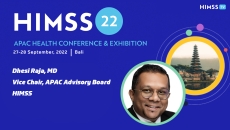
HIMSS22 APAC
It is crucial for hospitals to create systemic changes for population health management as an end goal for AI, according to Dr. Dhesi Raja, vice chair of the Board of Advisory at HIMSS Asia-Pacific.
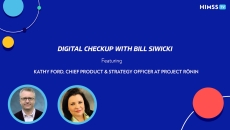
The chief product and strategy officer at Project Ronin, Kathy Ford, talks about reality versus hype regarding AI in the healthcare industry.
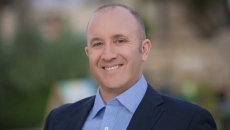
Mati Gil, CEO of AION Labs, describes how its new startup OMEC.AI came to fruition and what it aims to accomplish for drug discovery and development.

Authors of the study said the results raise concerns about worsening health disparities, especially when models can detect self-reported race information where human radiologists can't.