Cybersecurity and Privacy

While HIMSS Media editors anticipate that AI will be used in every layer of healthcare's tech stack in 2026, they stress that governance and human oversight are essential to ensure AI works safely at scale.
According to Barrett Loveless, infrastructure director at the PET Imaging Institute, EDR (endpoint detection and response) tools, combined with expert monitoring, have kept the institute breach-free for a decade.

During the HIMSS Cybersecurity Forum, Dr. Xiaoqian Jiang of the University of Texas Health Science Center at Houston said removing patient identifiers does not always make data anonymous.

The company, which changed its name from RIIG to Hootl in May, will use the funds for product development, regulatory preparedness and market growth.
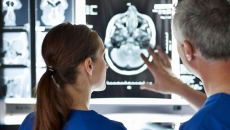
A diagnostic AI developed at Asan Medical Center has been shown to analyse medical images while protecting privacy.

AI is transforming care and improving outcomes, but Richard Staynings, chief security strategist at Cylera, says that, without clear governance and federal guidance, cybersecurity, privacy and patient safety may be at risk.

AI deployment in healthcare lags due to data security requirements and patient safety risks, says Ferrum Health CEO Pelu Tran, who recommends creating platforms that let providers securely plug in and swap AI tools as needed.
Cylera's Richard Staynings warns that, as many hospitals rush to bolt on AI tools, a lack of visibility into how these models operate and their vulnerabilities may jeopardize data safety and patient trust.

Dr. Arti Masturzo, chief medical officer at CCS, discusses the pros and cons of RFK, Jr.'s proposal for every American to wear a government-issued health monitoring device within four years, including concerns around device data accuracy.
Roger Neal, VP and COO at DRH Health, says that due to the complexities of the healthcare industry, "our goal right now needs to be to get neutral" rather than getting ahead of cyberthreat challenges.