Clinical decision support
Also, Medtech Global has integrated a clinical documentation AI into its popular patient management system in New Zealand.
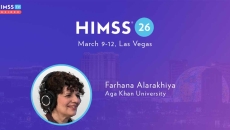
HIMSS Changemaker Awardee Farhana Alarakhiya discusses Afya Gemma, an AI-powered tool that provides best practice protocols with local context in English or Swahili for Kenyan doctors practicing in remote clinics.
It has demonstrated high accuracy in detecting pancreatic cancer by extracting and analysing 260,000 metabolic signals from just 500 microlitres of blood serum.

Also, Wellumio has received $4 million in pre-Series A funding to further develop its portable, AI-augmented brain scanner.
Also, an Indian sleep tech startup is headingo the United States after raising $3 million in seed funding.
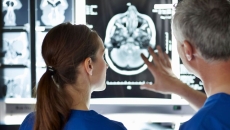
A neurologist's startup has developed a foundation model, based on 60,000 hours of brain wave records, which reportedly achieved 95% accuracy in identifying epilepsy biomarkers.
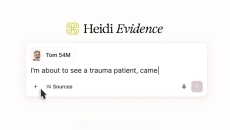
Rivalling OpenEvidence and DoxGPT, Heidi’s latest offering, Heidi Evidence, sets itself apart by allowing clinicians to upload their own sources and documents.
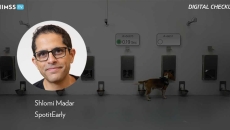
Shlomi Madar, CEO of SpotitEarly, discusses the company's noninvasive test using a breath sample, which is analyzed by specially trained dogs capable of identifying unique cancer-related scent signatures combined with AI technology.
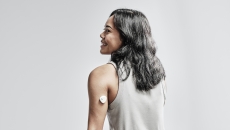
Extensive clinical validation and deployment are what remain to make it routine, according to University of New South Wales Scientia Professor Justin Gooding.

Dr. Michael Spaeder of the University of Virginia previews his upcoming HIMSS26 talk on using AI and machine learning to detect potentially catastrophic health events.